Short answer: don't use generated video when the asset's value depends on a claim being true — efficacy, authenticity of a speaker, proof of a result — or when the product's category carries its own rules. Use it for the parts that are craft: environment, light, motion, texture, framing.
That line is practical rather than moral. Generated video is very good at showing a product that exists; it is very bad at being evidence.
Five cases where the answer is no
1. Efficacy and health claims. Anything implying a medical, therapeutic or measurable result — "reduces", "clears", "clinically". A generated clip cannot carry that claim, and dressing one up as demonstration invites a problem the clip cannot solve. If the claim is real, the evidence exists elsewhere; if it isn't, no asset should make it.
2. A generated person making a claim. This is the sharpest case in the whole category. A synthetic speaker endorsing a product raises questions about endorsement authenticity and about disclosure — and those questions are not answered by a small label in the corner. If a testimonial is what sells the product, the testimonial has to be a person.
3. Before-and-after that implies proof. Generated skin, generated surfaces, generated results: the format is read as evidence even when it is explicitly labelled as illustration. If your category treats before/after as a substantiation, treat the format as off-limits rather than as a styling choice.
4. Categories with their own rules. Regulated goods — supplements, medical devices, cosmetics with claims, financial products, children's products — usually carry advertising rules that exist independently of how the asset was made. A generated clip does not create an exemption; it adds a second question on top of the first.
5. Anywhere a synthetic-media disclosure would do the work you needed the clip to do. If the clip only lands because it looks real, then a required disclosure removes the effect and the asset loses its purpose. Better to know that before producing six of them.
The gate: five questions
Run this before generating, and answer honestly. One "yes" stops the format.
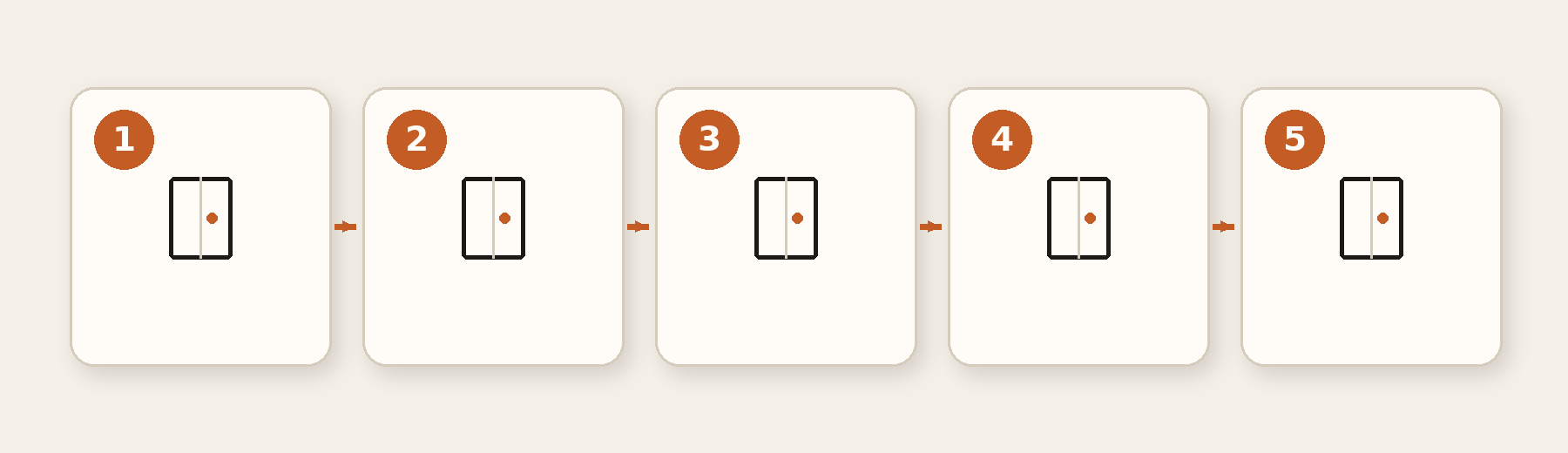
Five gates in order. The questions themselves are in the article, not on the graphic, so the figure stays language-neutral and is not legal advice.
- Does the clip need to be believed as evidence, rather than looked at as craft?
- Does anyone in the clip make a claim, promise or comparison?
- Does the clip imply a result the viewer will read as proof of performance?
- Is the product in a category that carries its own advertising or substantiation rules?
- Would a required "AI-generated" disclosure undercut the clip's reason for existing?
If all five are "no", the clip is product craft — texture, environment, motion — and the rest of this article's caution does not apply.
Disclosure practices that survive scrutiny
If you produce generated product video, these are the habits that make the rest of the catalogue defensible.
Label where the platform asks, and keep the label visible. A disclosure that requires a magnifying glass is a disclosure in name only. Check the platform's current rule rather than deciding for yourself what counts.
Never let generated footage appear to be a customer. Not a review, not a comment, not a "real user". This is the line where a craft shortcut becomes a deception question.
Keep the real pack in the plate. For regulated categories, use generated motion for the environment and composite the actual product from a real photograph. The result is honest, and it survives a label being added on top.
Keep your source files and the reason for each take. If a claim is ever challenged, "we meant it as illustration" is only credible when you can show the reference, the disclosure decision and the date.
Write the disclosure decision down before producing. Required, applied, or explicitly not required — and by which rule. Retrofitting that answer after a rejection is the expensive version.
What stays safely inside the line
Generated video is a legitimate production tool for:

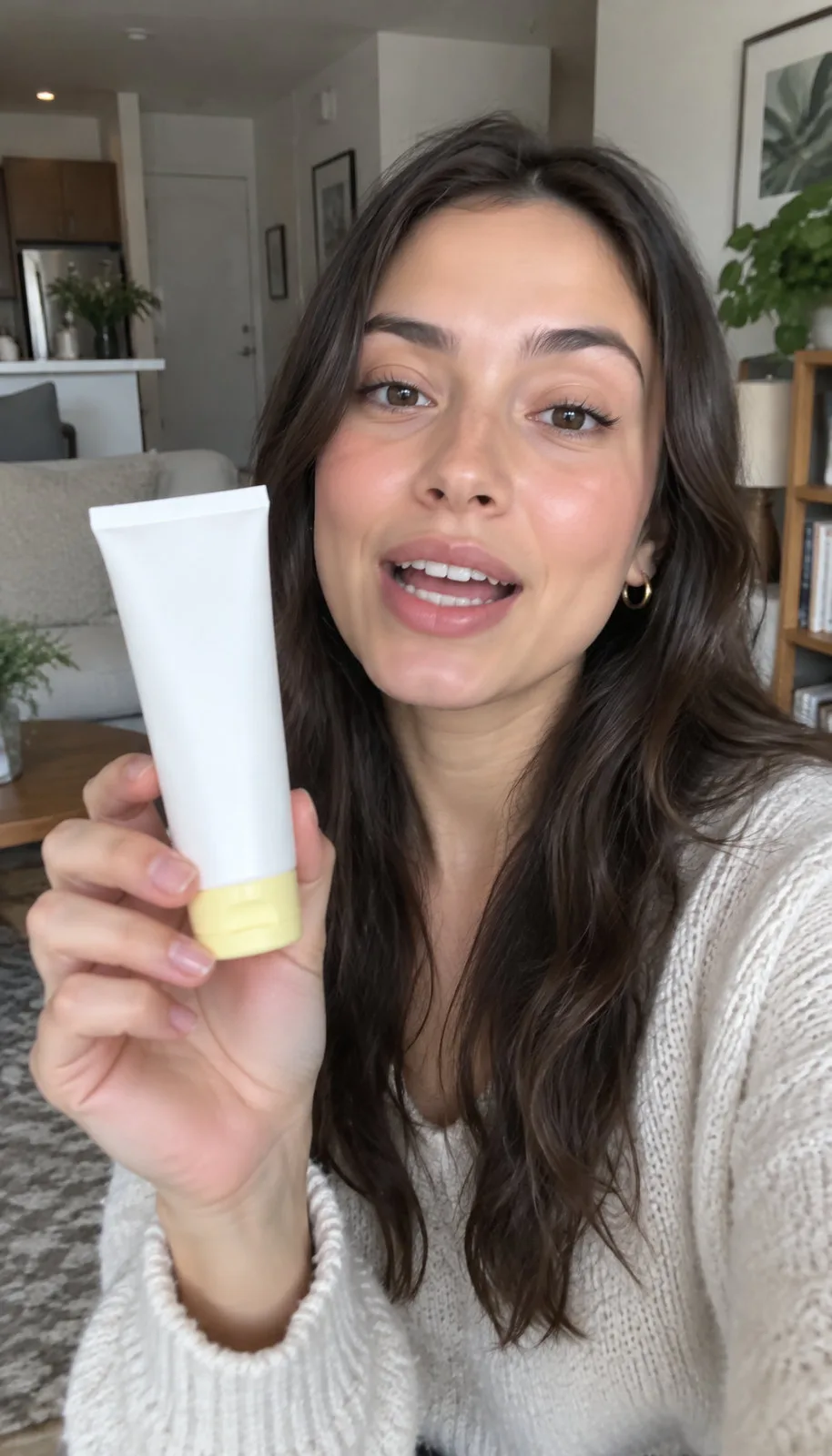
An illustrative product-only scene: no speaker, no claim typography, no testimonial. It is a photograph made for this article, not a generated video frame.
- environment and background, where the product is composited from a real shot;
- camera movement on a real product plate;
- texture and surface detail that is not a claim (the cream, the fabric, the finish);
- abstract or graphic motion for a brand campaign with no performance claim;
- placeholder clips for internal review, never published.
The common thread: none of these ask the viewer to believe something about performance.
If the gate passes
If your shot is product-only, carries no claim and the platform does not require a label you would have to hide, the work is ordinary production. Open the Noiz Studio video panel with your real product still attached — and keep the still in the project folder next to the export, because the reference is what makes the result defensible.
If the gate did not pass, the right move is a different asset, not a better prompt.
FAQ
Is labelling enough to make any clip acceptable? Not on its own. A label discloses how the asset was made; it does not substantiate a claim. Those are separate questions, and the second one is usually the one that matters.
Can I generate a spokesperson if I disclose it? That is a question for counsel and for the platform's endorsement rules, not for a blog. Treat it as a decision with a documented answer rather than a default.
What about using generated B-roll of a real product? Closer to ordinary craft, provided the product shown is the real one and no performance claim is attached. Compositing from a real photograph is the safer version.
Do the rules differ by country? Almost certainly, and this article does not attempt to map them. Treat jurisdiction as part of the question you take to counsel.
Where do I find out what a platform requires? The platform's own policy pages, read at the time of publishing. They change, and a summary — including this one — is not a substitute.
More production notes: the Noiz blog index.