Most prompt advice fails because it describes moods. "Cinematic", "premium", "dynamic" — a model can map those to almost anything, and you cannot tell whether it obeyed. Instructions that name a physical behaviour are different: they are checkable. You look at the output and ask a yes/no question.
Below are twenty clauses that survive that test, grouped by what they control. Then how to combine them without fighting yourself, and two complete prompts written end to end.
Camera instructions
- Camera locked off, no movement. The most underused instruction in product video. Without it, models drift by default.
- Slow dolly in. Camera travels toward the subject at a constant, slow rate.
- Slow dolly out. The reverse — subjects reveal their environment instead of their detail.
- Truck left to right. Camera slides sideways, parallel to the subject; keeps perspective stable while the framing changes.
- Orbit around the subject, 90 degrees. Camera arcs while the subject stays put. Use half-orbits if you need a clean start and end frame.
- Rack focus from background to product. Focus pulls between two distances; the product becomes sharp only at the end.
- Handheld, slight drift. Adds human imperfection. Specify "slight" — unqualified handheld becomes shaky.
- Top-down camera descending slowly. A flat-lay becomes a reveal.
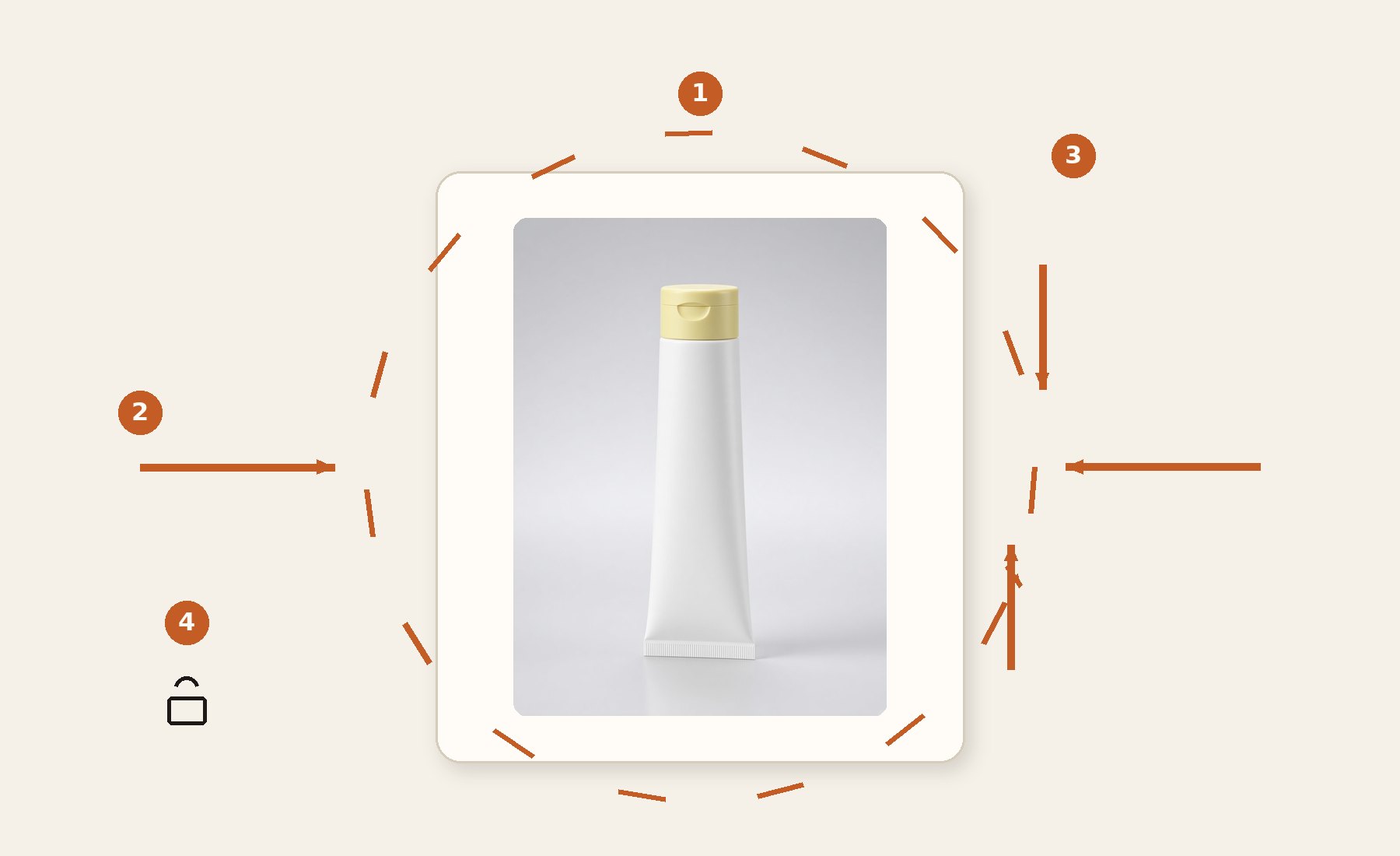
A schematic of four camera instructions — (1) orbit, (2) dolly in, (3) tilt, (4) lock off — drawn around an illustrative still, not a motion test from any model.
Subject instructions
- Product rotates at constant speed. The hard part is constant; without it, models ease in and out.
- Product rotates one quarter turn and stops. A bounded move beats a continuous one when you need an end state.
- Product stands still, nothing in the frame moves. For texture and label shots, stillness is the instruction.
- A hand enters from the lower left and lifts the product. Give the entry direction; an unspecified hand tends to appear mid-frame.
- Liquid pours and settles. Name the end state, or the liquid keeps flowing for the whole clip.
- Product falls into frame and lands. One motion, one landing. Ask for a settle beat or it will bounce forever.
Light and atmosphere
- Hard rim light from behind, dark background. Defines edges; useful when the product is dark on dark.
- Soft top light, seamless background. Catalogue-clean; almost no drama, all detail.
- Sunlight through a window, dust visible in the beam. Adds depth to lifestyle scenes without extra geometry.
Timing and structure
- One continuous shot, no cuts. Prevents the model from inventing a second scene at the halfway mark.
- Hold the final framing for the last second. Gives you a clean outro frame instead of motion still resolving.
- Start on the product, end on the product. A structural clamp: the clip returns where it began, which reads as intentional.
Combining them without fighting yourself
Three rules.
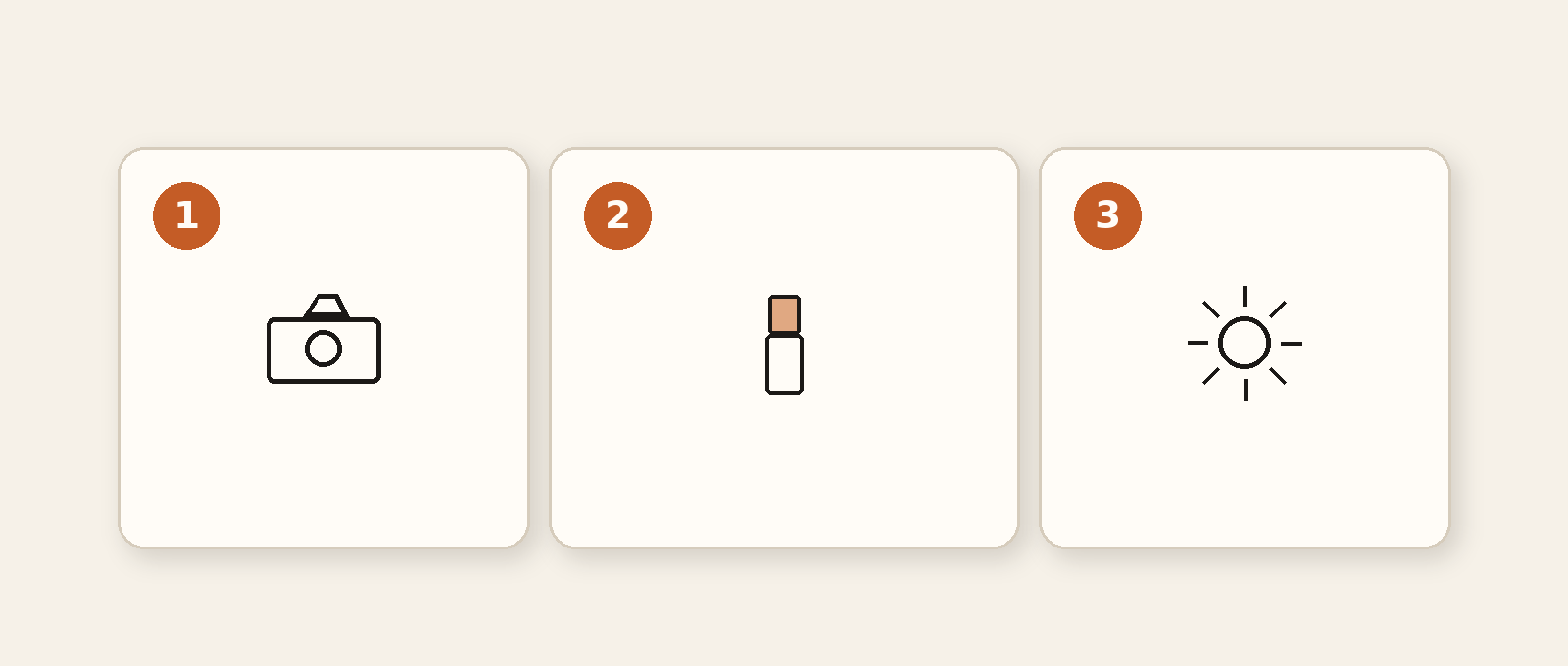
Write three clauses and stop: what the camera does, what the subject does, and how the light behaves. The diagram is a prompt structure, not a result.
One camera instruction per clip. Two camera moves in the same sentence divide the same two seconds and produce neither.
One subject motion per clip. Product rotating plus hand entering plus liquid pouring is a montage, and montages need cuts, not one continuous prompt.
Quantify what you can. "Slow", "quarter turn", "half second hold" are checkable. "Elegant" is not.
A workable pattern: [camera instruction] + [subject instruction] + [light instruction]. That is three clauses and usually the whole prompt.
Worked example 1: turntable
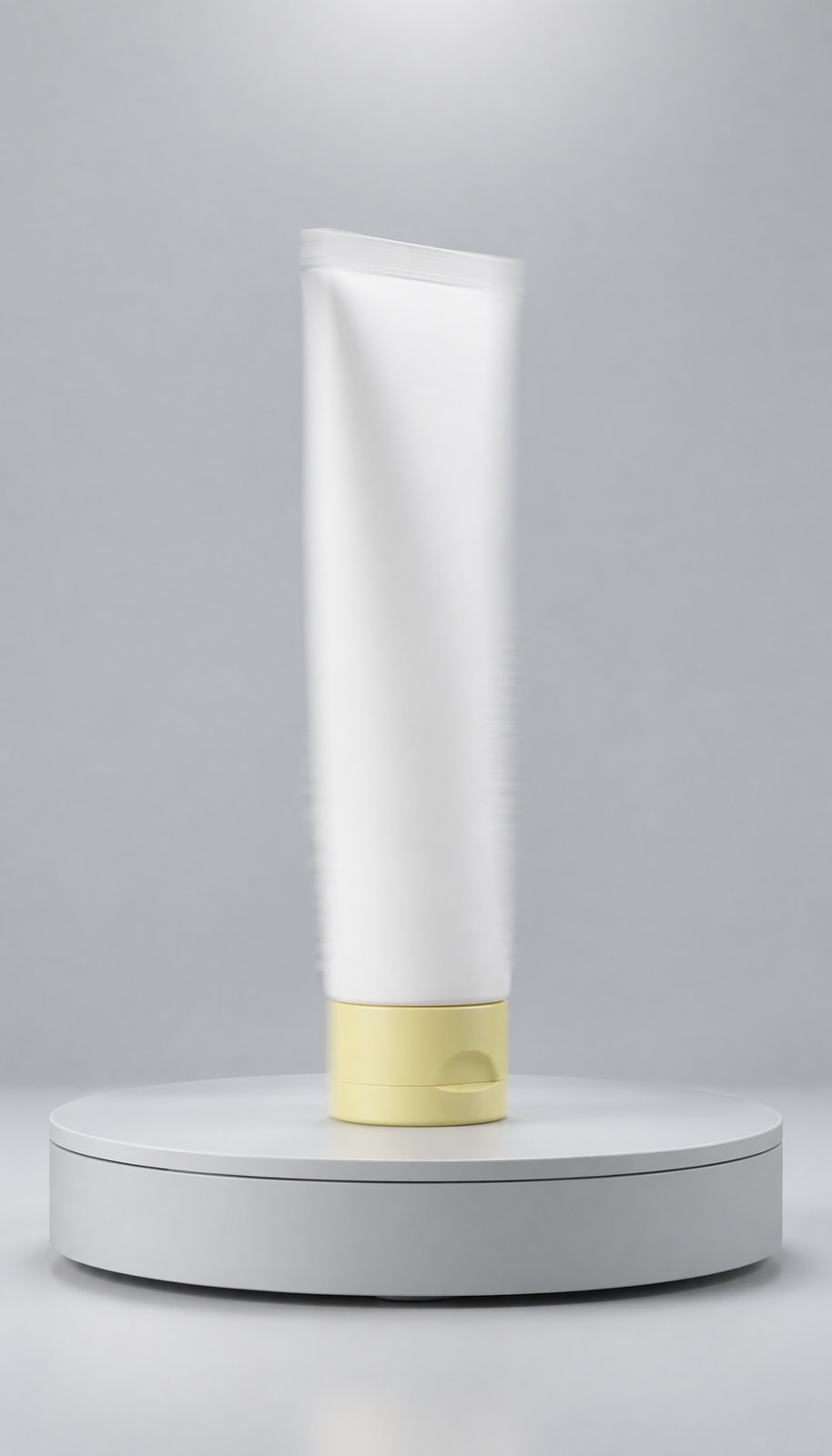
A matte white cosmetic tube with a pale-yellow cap on a pale grey turntable, rotating slowly at constant speed, camera locked off, seamless pale grey background, soft top light, no cuts.
Why it works: three instructions, no adjectives, and every clause is verifiable in the output. When it fails — and it will, on the constant-speed part — you know exactly which clause to repeat more forcefully rather than rewriting the whole prompt.
To iterate on this in the product, open the generator and reuse the same first frame each time: Run this prompt in Noiz Studio.
Worked example 2: hand entry
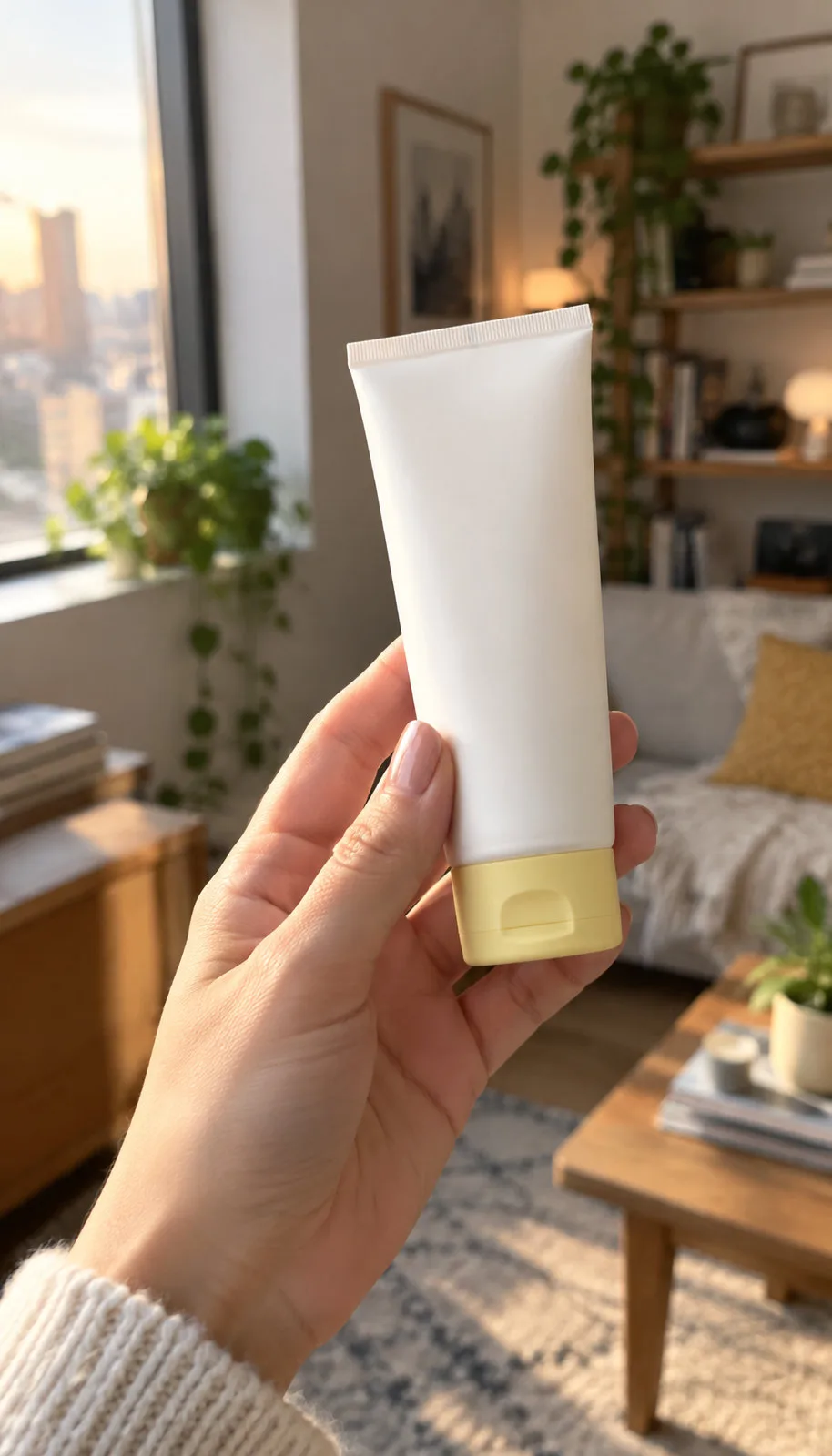
A hand lifts the product into frame from the lower left, camera handheld with slight drift, warm window light, background falling out of focus, one continuous shot.
Note what changed: the camera instruction moved from "locked off" to "handheld with slight drift", because a hand entering a locked-off frame looks pasted. Motion instructions are a system, not a checklist.
Which clause failed?
When a clip comes back wrong, name the clause before rewriting anything. Rotation that eases in and out is a subject clause failure. A camera that drifts when you asked it to lock off is a camera clause failure. A product that changes shape is neither — it is a first-frame failure, and no prompt fixes it.
That habit turns prompting from guesswork into a checklist: one variable per attempt, one verdict per render.
Common mistakes in prompt writing
Stacking three aesthetic adjectives and no behaviour. The model will produce something, but you cannot tell what it obeyed.
Asking for a cut in a single clip. Cuts are an edit decision; a model asked for one will usually invent a dissolve mid-motion.
Describing the product twice. Once in the first frame, once in the prompt is enough. Twice invites contradictions.
Ignoring the end state. "Liquid pours" without "and settles" produces a clip that never resolves, which is unusable as a loop.
FAQ
Do these prompts work the same on every model? The wording transfers; the obedience does not. Constant rotation and locked-off camera are the two clauses most likely to need repetition on any model.
How long should a prompt be? Three clauses is usually right. Past six, clauses start contradicting each other and you lose the ability to attribute a failure.
Should I write prompts in English if the product is local? Write them in English for most video models — the instruction vocabulary is better covered. Keep the customer-facing copy in your own language.
Can I reuse one prompt across a product range? Yes, if the camera and light clauses stay and only the product clause changes. That is the point of writing clauses instead of sentences.
More product-video notes: the Noiz blog index.